
The MoxiPlayer TV Stick is being marketed as a revolutionary streaming device that unlocks unlimited entertainment, eliminates subscription fees, and turns any TV into a powerful smart hub in seconds. The ads make it sound like the future of television. A visionary founder. Explosive demand. Massive discounts. Limited stock.
But when you look closer, the story begins to fall apart.
Behind the polished marketing and dramatic claims lies something far more familiar. This is not a breakthrough technology company reshaping the television industry. It is a classic dropshipping operation built around exaggerated promises, artificial urgency, and a product that can be purchased wholesale for a fraction of the advertised price.
If you are considering buying the MoxiPlayer TV Stick, this detailed investigation will show you exactly what it is, how the operation works, and whether you should spend your money on it.
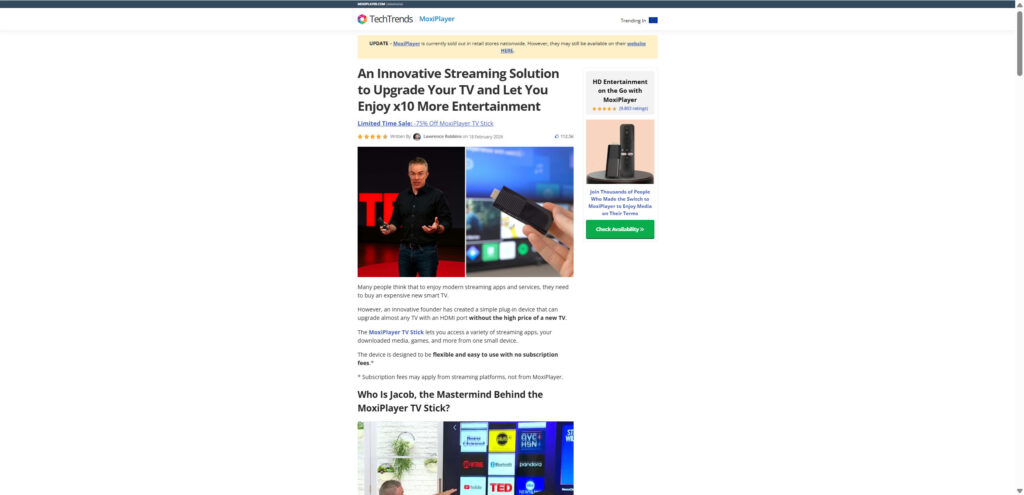
Overview of the MoxiPlayer TV Stick
The MoxiPlayer TV Stick is advertised as an “innovative streaming solution” that upgrades any TV with an HDMI port into a modern entertainment powerhouse. According to the promotional content, it allows users to:
- Access streaming apps in one place
- Enjoy movies, live channels, and games
- Browse the internet
- Eliminate subscription costs
- Turn old TVs into smart TVs
- Get 10 years of lifespan
- Receive real-time updates
- Enjoy “unlimited media”
On the surface, that sounds impressive. But when we break it down piece by piece, the reality becomes much clearer.
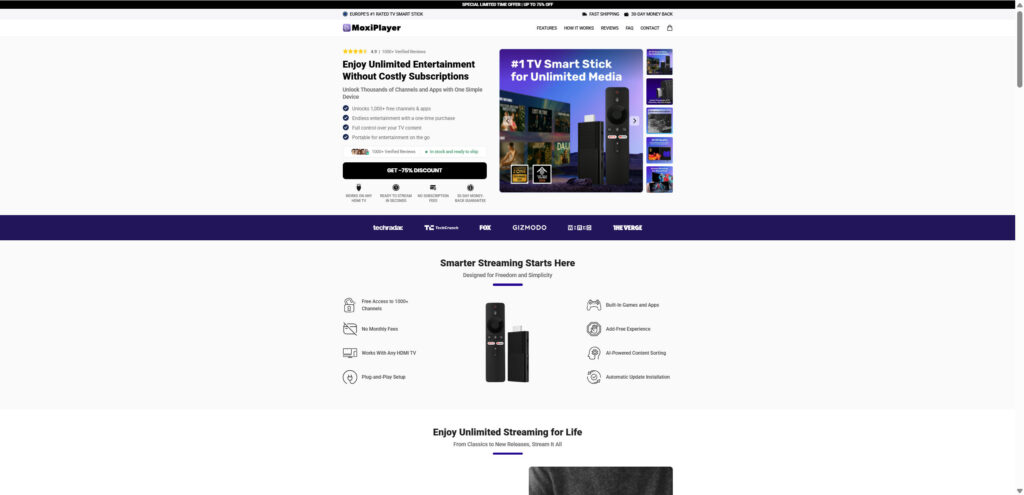
What Is MoxiPlayer Really?
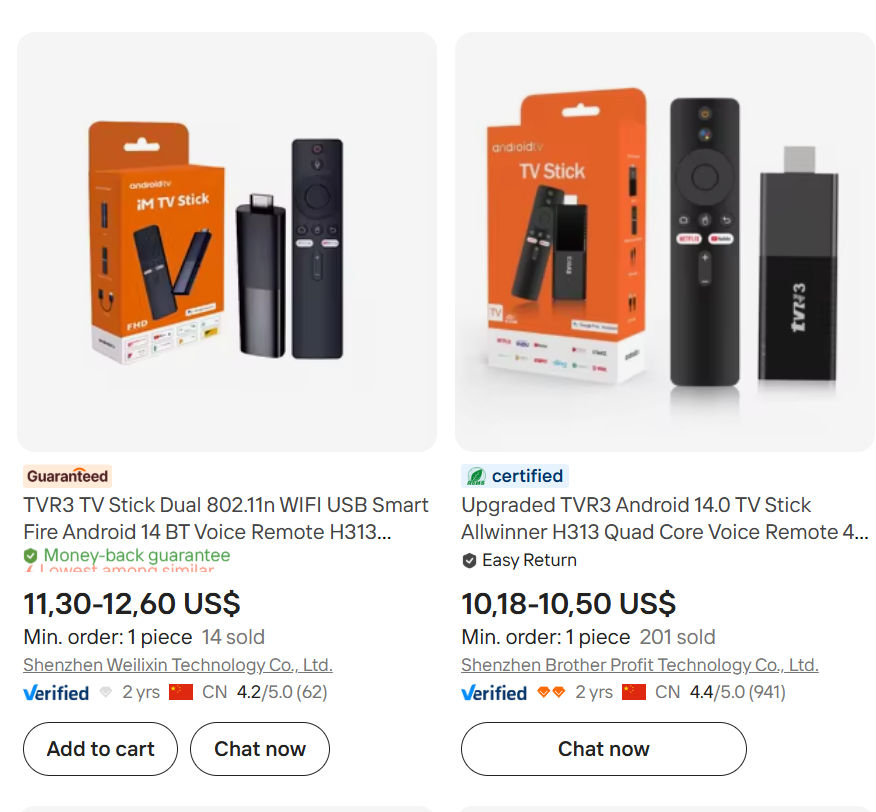
The device shown in the marketing material is visually identical to generic Android TV sticks sold on wholesale platforms such as Alibaba and AliExpress. These devices are typically labeled as:
- MX10 TV Stick
- TVR3 Android TV Stick
- H313 Quad Core Android Stick
- Android 14 TV Stick
These wholesale products sell for approximately 10 to 15 US dollars per unit. The hardware specifications usually include:
- Allwinner H313 processor
- 1GB or 2GB RAM
- 8GB or 16GB storage
- Basic WiFi support
- Generic Android firmware
MoxiPlayer is not manufacturing proprietary hardware. It is rebranding an existing low-cost Android TV stick and selling it at a dramatically inflated price, often between 69 and 139 euros per unit depending on the discount tier.
The Fake Founder Story
The ads introduce “Jacob,” an engineer who allegedly spent two years developing a revolutionary device after becoming frustrated with streaming limitations.
There is no verifiable evidence that this person exists.
No LinkedIn profile.
No company registration records.
No patents.
No engineering documentation.
No interviews outside the ads ecosystem.
The founder story is a classic emotional marketing technique used to create credibility and relatability. It gives the product a human narrative while avoiding any verifiable business transparency.
Legitimate consumer electronics companies publish company details, executive teams, headquarters addresses, and regulatory certifications. MoxiPlayer does not.
The “TechTrends” Advertorial
The promotional content appears under a publication-style layout branded as “TechTrends.” It includes:
- A journalist name
- A publication date
- Fake Facebook-style engagement
- Inflated rating numbers
- Emotional testimonials
- Limited time offer banners
However, this is not an independent review. It is an ads funnel designed to mimic editorial credibility.
Common red flags include:
- Artificial scarcity messaging
- Claims of 100,000 daily visitors
- Countdown-driven urgency
- “Not available on Amazon or eBay” positioning
- Wholesale discount narrative
The purpose is simple. Build trust quickly, create urgency, and convert traffic before consumers investigate further.
The “Unlimited Content” Claim
The ads strongly implies that users can access content from platforms like Netflix, Disney+, Max, and others in one place without subscriptions.
Then in small print, it states:
“Subscription fees may apply from streaming platforms, not from MoxiPlayer.”
This disclaimer quietly removes the core promise.
The device does not eliminate subscription fees. It merely runs apps that already require subscriptions. Just like any Android TV device.
There is no proprietary content system. No exclusive streaming infrastructure. No revolutionary licensing agreements.
It is simply an Android-based interface.
The 10-Year Lifespan Claim
The ads states the device has a minimum lifespan of 10 years.
This is highly unlikely for low-cost Android TV sticks.
These devices typically receive minimal firmware support. Many generic Android TV sticks stop receiving updates within months. Hardware performance also degrades over time, especially with limited RAM and storage.
Established brands invest heavily in software support and security updates. Dropshipped Android sticks rarely do.
The Fake Review System
The website claims:
- 9.803 reviews
- 9.2 rating
- Over 75,000 happy customers
- Over 3,000 five-star reviews
Yet there is no independent third-party review platform verifying these numbers.
The testimonials follow predictable patterns:
- Generic names
- Generic profile images
- Overly enthusiastic language
- No critical feedback
Authentic products have mixed reviews. This one appears artificially curated.
Artificial Scarcity and Urgency
The sales page uses:
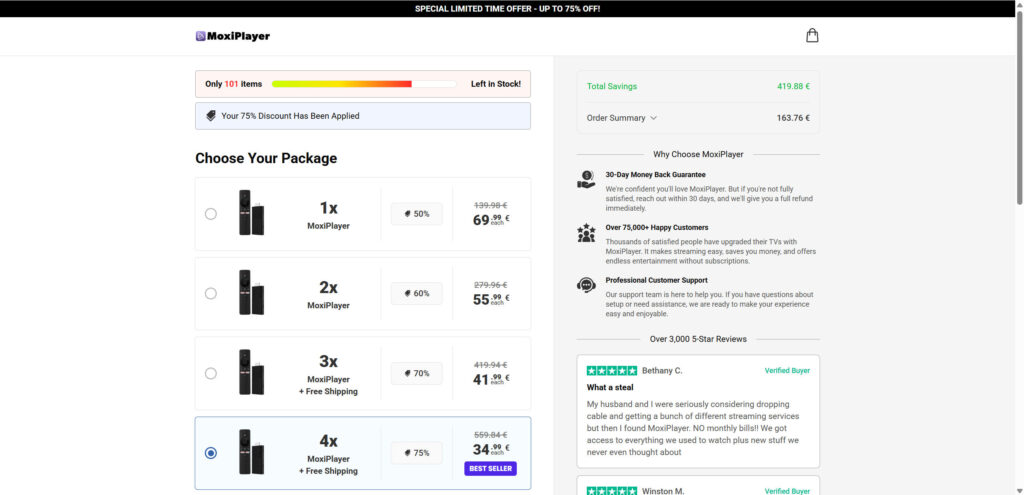
- “Only 101 items left”
- “Discount valid for first 1,000 buyers”
- “Unprecedented spike in sales”
- “Sold out nationwide”
These are automated urgency triggers. They are not connected to real-time inventory systems.
Every visitor sees similar scarcity warnings.
This is standard in dropshipping funnels because urgency increases conversion rates dramatically.
Inflated Pricing Structure
The pricing is structured to anchor a high retail value:
- Original price: 139.98 €
- Discounted: 69.99 €
- 75 percent off
- “Wholesale opportunity”
In reality, the wholesale cost is approximately 10 to 15 dollars per unit.
This creates massive profit margins.
The perceived discount is psychological framing, not genuine value reduction.
The “Not Available on Amazon” Claim
The ads emphasizes that the product is not available on Amazon or eBay.
This is framed as exclusivity.
In reality, it prevents consumers from seeing authentic customer reviews and price comparisons.
Generic Android TV sticks are widely available on Amazon at lower prices under different brand names.
How the Dropshipping Operation Works
This operation follows a highly structured playbook that has been used repeatedly in similar gadget campaigns.
Here is how it works step by step.
Step 1: Source a Cheap Generic Product
The seller identifies a low-cost electronic product from a Chinese wholesale supplier.
Criteria include:
- Visually modern design
- Familiar use case
- Broad consumer appeal
- Easy shipping
- Low production cost
Android TV sticks meet all of these criteria.
Wholesale cost: approximately 10 to 15 dollars.
Step 2: Rebrand the Product
The seller creates:
- A new brand name
- A simple logo
- Custom packaging images
- A professional-looking website
The product itself remains unchanged.
No proprietary development occurs.
Step 3: Build an Emotional Narrative
The marketing introduces:
- A visionary founder
- A revolutionary mission
- A market disruption story
- Industry transformation language
This narrative builds emotional trust.
Consumers are not just buying a gadget. They are buying into a movement.
Step 4: Create an Advertorial Funnel
The advertorial mimics journalism.
It includes:
- Publication-style layout
- Author attribution
- Review score
- Social engagement icons
- Testimonials
This format reduces skepticism.
Readers perceive it as a review, not an advertisement.
Step 5: Use Psychological Triggers
The page deploys:
- Countdown timers
- Stock scarcity bars
- Massive discount claims
- Urgency messaging
- Limited-time updates
These trigger fear of missing out.
Consumers rush purchases.
Step 6: Process Orders
Once payment is made:
- The seller forwards the order to a supplier
- The supplier ships directly from China
- Shipping times vary
- Tracking may be inconsistent
The seller never handles inventory.
Step 7: Complicate Returns
The website advertises a 30-day money-back guarantee.
However:
- Returns require shipping to China
- Shipping costs often exceed product value
- Communication is limited
- Refunds are delayed or denied
Many customers abandon refund attempts.
Step 8: Scale Through Paid Ads
The operation relies heavily on:
- Social media ads
- Influencer-style content
- Sponsored articles
- TikTok promotions
High-margin pricing allows aggressive advertising.
Step 9: Rebrand and Repeat
When consumer complaints increase:
- The brand name changes
- The website design changes
- The same product relaunches under a new name
This cycle repeats across markets.
What to Do If You Already Bought MoxiPlayer
If you have already purchased the MoxiPlayer TV Stick, take the following steps immediately.
- Contact your bank or card provider and request a chargeback if you feel misled.
- Save screenshots of the advertorial and product claims.
- Document shipping tracking and communication.
- Request a refund in writing.
- Calculate return shipping cost before sending the product back.
- Avoid accepting partial refund offers without written confirmation.
- Leave factual reviews to warn other buyers.
- Monitor your payment method for additional charges.
- Avoid purchasing similar products from identical funnels.
- Report misleading advertising to consumer protection authorities.
Act quickly. Chargeback windows are limited.
The Bottom Line
The MoxiPlayer TV Stick is not a revolutionary streaming breakthrough. It is a low-cost Android TV stick rebranded and sold through a dropshipping funnel using exaggerated claims and psychological urgency tactics.
The hardware itself may function at a basic level. But the marketing promises far exceed the actual product capabilities. The inflated pricing, artificial scarcity, unverifiable founder story, and difficult return process all point to a high-risk purchase.
There are better options available from established brands with transparent pricing, verified reviews, and reliable customer support.
Before buying any heavily discounted “revolutionary” gadget promoted through advertorial funnels, pause and research carefully. A few minutes of investigation can save you money, frustration, and disappointment.